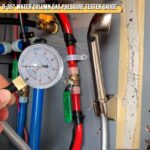
A digital manometer measures pressure and shows the result on an electronic display. Depending on the instrument and its ports, it may measure gauge pressure, differential pressure or absolute pressure. HVAC engineers use digital manometers for tasks such as checking filter pressure drop, duct pressure and appliance pressures; other models are used in laboratories, pneumatic systems and industrial maintenance.
The right instrument is determined by the pressure range, required accuracy, media compatibility and the type of measurement—not by the number of units shown on the display. This guide explains those choices and the basic measurement process.
Safety note: Work on fuel-gas appliances and pressurised systems can be hazardous. Follow the equipment manufacturer’s procedure and applicable regulations. If you are not trained and authorised for the task, use a qualified technician.
Digital manometer quick-selection guide
| Application | Measurement to look for | Important features |
|---|---|---|
| HVAC filters and ducts | Low differential pressure | Fine resolution, two ports, zero function and suitable tubing |
| Gas-appliance servicing | Low gauge or differential pressure | Correct range and units, overpressure protection and manufacturer-approved connections |
| Pneumatic troubleshooting | Gauge or differential pressure | Range matched to the system, durable fittings and min/max capture |
| Laboratory work | Application dependent | Documented accuracy, calibration options, repeatability and data logging |
| Airflow calculation with a Pitot tube | Differential pressure | Very low-pressure capability and compatible velocity/volume-flow functions |
What is a digital manometer?
A manometer compares a pressure with a reference. Traditional liquid-column instruments show that difference through the height of a liquid. A digital manometer uses a pressure sensor, converts the sensor output into a numerical reading and displays it in units such as pascals, millibars, inches of water column or pounds per square inch.
Digital instruments are popular because they can be compact and easy to zero, and may add useful functions such as hold, minimum/maximum capture, averaging and data logging. Those conveniences do not make every model suitable for every job: the sensor range, accuracy specification and allowable media still matter.
Gauge, differential and absolute pressure
Gauge pressure
Gauge pressure is measured relative to local atmospheric pressure. A reading of zero therefore means the measured pressure is equal to the surrounding atmosphere.
Differential pressure
Differential pressure is the difference between two connected points. A two-port digital manometer can compare the pressure before and after a filter, across a fan or between two sections of ductwork.
Absolute pressure
Absolute pressure is measured relative to a vacuum. This requires an instrument designed with an absolute-pressure reference and should not be assumed merely because a device has a digital display.
What is a digital manometer used for?
- HVAC commissioning and service: checking static pressure, pressure drop across filters and components, and—where the instrument and procedure permit—gas flow or appliance pressure.
- Ventilation work: measuring differential pressure and, with a compatible Pitot tube and instrument, deriving air velocity or volume flow.
- Pneumatic systems: comparing supply and downstream pressures during setup or fault-finding.
- Laboratory testing: recording small pressure differences in controlled experiments.
- Maintenance: checking whether pressure changes correspond with clogged filters, restrictions, leaks or equipment adjustments.
How to choose a digital manometer
1. Match the pressure range to the job
The instrument must safely cover the highest expected pressure, including likely transients. A range that is far wider than necessary may sacrifice useful resolution at the low end. Never exceed the manufacturer’s stated operating or overpressure limit.
2. Check accuracy, resolution and repeatability separately
Resolution is the smallest displayed increment; it is not the same as accuracy. Read the complete accuracy statement, including whether it is expressed as a percentage of reading, full scale or both. For comparative work, repeatability can be just as important.
3. Choose the correct pressure mode
A single-port gauge instrument and a dual-port differential instrument solve different problems. Confirm whether the device measures positive pressure, negative pressure, differential pressure or a combination of these.
4. Check media and connection compatibility
Confirm that the sensor, tubing and fittings are compatible with the gas or fluid being measured. Also check port size, hose diameter, temperature limits and whether accessories are included. A convenient connector is not evidence that an instrument is approved for a particular fuel-gas task.
5. Prefer useful functions over a long feature list
For field work, a zero function, readable backlight, hold mode and min/max capture are often valuable. Data logging, wireless export and timed averaging become more important when readings must be documented or compared over time.
6. Plan for calibration
If the reading supports safety, compliance or quality decisions, choose an instrument with a suitable calibration route and maintain records appropriate to the work. Follow the manufacturer’s interval and any requirements imposed by your organisation or procedure.
How to use a digital manometer
- Confirm suitability. Check the measurement type, range, media compatibility, pressure rating and required accessories.
- Inspect the instrument. Look for damaged tubing, loose fittings, contamination and a low battery.
- Select the correct unit. Use the unit specified by the equipment manufacturer or test procedure.
- Zero the manometer. With ports in the condition specified by the manual, allow the reading to stabilise and apply the zero function.
- Connect the pressure points. Attach the positive and negative ports as required, avoiding kinks and leaks.
- Apply pressure gradually. Watch the reading and remain within the instrument’s limits.
- Allow the value to stabilise. Record the result, test conditions and instrument identification when documentation matters.
- Disconnect safely. Depressurise as the procedure requires, remove the connections and inspect the instrument after use.
Digital manometer vs pressure gauge
A pressure gauge is the broader term: it can be mechanical or electronic and usually reports pressure at a point. A digital manometer is particularly associated with electronic measurement of low pressure or pressure difference, although products and industries do not always use the terminology consistently.
Choose based on the specification rather than the label. A rugged high-pressure digital gauge may be ideal for hydraulics, while a sensitive differential manometer is better for a small filter pressure drop.
Useful digital manometer comparisons on this site
Before buying, compare each candidate’s current manufacturer specification with your required range, accuracy, pressure mode and connection method. Product listings can change, so verify the manual rather than relying on a marketplace title alone.
Frequently asked questions
Can a digital manometer be used to check gas pressure?
Some digital manometers are designed for the low pressures used in specific gas-appliance service procedures. The instrument, fittings and range must all be suitable, and the work should be performed only by someone trained and authorised for that system.
What is the difference between a digital manometer and a differential pressure gauge?
A differential pressure gauge is any gauge designed to compare two pressures. A dual-port digital manometer is one electronic form of differential pressure gauge.
Why does a manometer need to be zeroed?
Zeroing establishes the reference before measurement and compensates for small offsets under the conditions described by the manufacturer. If a stable zero cannot be obtained, inspect the setup and instrument before proceeding.
What units should an HVAC manometer display?
The required unit depends on the equipment and region. Common low-pressure units include pascals, hectopascals or millibars, and inches of water column. Use the unit stated in the service documentation to avoid conversion errors.
Technical references
- Testo: differential-pressure measurement in heating systems
- Testo: differential pressure, filter checks and Pitot-tube applications
Last reviewed: August 2026. Always check the current manufacturer manual and applicable safety requirements before testing.